Project Showcase

Hidden Landscapes

Hidden Landscapes documents the evolution of former colliery land in North East England, revealing the layers of change written into these post-industrial spaces.

These terrains are part of my social, cultural and physical heritage, their story intertwined with my family’s legacy of hardship and resilience. My work illuminates what most eyes pass by: the exquisite detail of the often overlooked organisms that orchestrate ecological recovery.

When the pits closed, they left more than physical scars. Communities, resilient in the face of adversity, lost not just their livelihoods but their identity and purpose. The rapid “greening” of spoil heaps and the clearing of pit buildings swept away much of the visible evidence of the industry that had shaped them, and people were expected to simply move on. Yet healing, whether of land, community or self, rarely follows such simple prescriptions. In returning to these liminal spaces, I have come to understand my own loss and grief, and discovered that restoration begins when we pause to notice the quiet work of renewal beneath our feet.

I photograph these overlooked agents of change: fungi that turn endings into beginnings, weaving death back into the cycle of life; lichens, remarkable partnerships of fungus and alga, spreading their tapestries across weathered stone and young bark; pioneering plants pushing through thin, damaged ground. These organisms do not erase the industrial past. They grow upon it, drawing spoil, stone and scar into new forms of life. In this, they mirror how healing so often unfolds: not by denying trauma, but by transforming it into a foundation for new growth.

The work unfolds through three connected themes:


RECLAMATION – pioneer species, especially lichens, settling on harsh and barren surfaces.

TRANSFORMATION – nature’s recyclers at work, as fungi, slime moulds and decomposers return matter to the living world.

RENEWAL – the wildflowers, seeds and returning life of a recovering landscape.

Isolated against darkness, these forms are often distilled to their essence: bead-like slime moulds become a meditation on transience, lichen patterns an expression of endurance, and decay a quiet artistry of change. Each image honours what was lost, what endures, and what might yet become.

Selected Plates

Plates & Field Notes

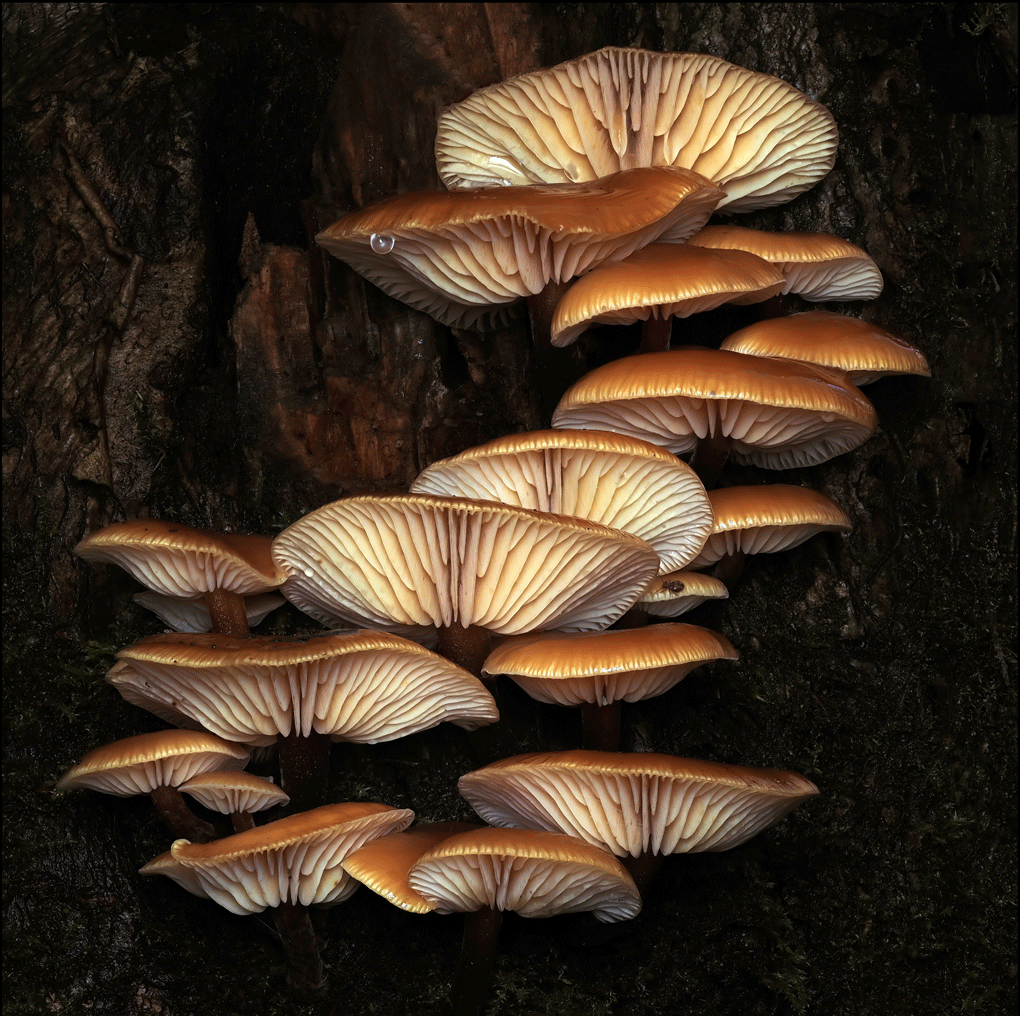
Plate I — Velvet Shank

This mushroom grows in clusters on dead and dying broadleaf wood, especially willow, elm and ash. Its glossy orange-brown cap is sticky when wet, while its stem is covered in fine velvety hairs, darkening to near-black at the base. Unusually, it fruits through the coldest months, from late autumn to early spring, and can survive being frozen, resuming growth when it thaws.

On restored colliery sites, willow is often among the first trees to colonise old spoil. As these trees age and die, velvet shank helps break down their wood, including the tough lignin, returning nutrients to the soil and creating habitat for insects and other wildlife.

Coal is the remains of ancient wood that escaped decay. The velvet shank does the opposite, rotting wood back into the living landscape, bringing a flash of colour to the reserve in the depths of winter.

Plate II — Slime Mould

These glossy white beads are the fruiting bodies, or sporangia, of a slime mould, gathered on damp, decaying wood. Slime moulds are not fungi but amoeba-like organisms. For most of their lives they live hidden in rotting wood and leaf litter as a moving, feeding mass called a plasmodium, grazing on bacteria, yeasts and fungal spores. When food or moisture runs short, they transform into structures like these, which ripen, change colour and release spores into the air.

In the deadwood of restored colliery woodlands, slime moulds play a quiet role in the decomposer community, helping regulate the microbes that break down fallen timber.

Plate III — Red Clover

Acorns ripen in autumn, green at first and turning brown as they mature. Oaks crop unevenly, producing huge numbers in some years, known as mast years, and very few in others. Acorns feed a wide range of wildlife, including jays, wood pigeons, squirrels, mice and deer. Jays are the oak's most important planters: in autumn, a single jay can bury thousands of acorns to eat later, and the ones it forgets can grow into new trees, often far from the parent oak. Once grown, oaks support more wildlife than any other British tree, with over 2,300 species associated with them.

Oaks grew in this region long before the mines, and older trees survived in hedgerows and woods through the years of industry. Jays now carry their acorns onto former colliery land, where oaks are also planted in new woodland. Growth is slow: an oak usually produces its first acorns only at around 40 years old. Each acorn that takes root here is the start of woodland for generations to come.

Red Clover emerges as both healer and historian in these post-industrial landscapes. When seen up close, its rose-pink blooms become intricate architectures of renewal, each flower head actually a cluster of tiny florets, much like how recovery happens - not in one grand gesture but in countless small acts of restoration. This plant carries multiple histories: as a nitrogen-fixer, it enriches soil depleted by industry, creating conditions for other species to follow; as traditional medicine, it connected mining communities to ancient knowledge, its flowers collected and dried for treating respiratory problems - a poignant irony in communities shaped by coal dust.

The presence of Red Clover in these spaces speaks to nature's practical resilience: while humans once extracted wealth from deep underground, this humble plant works to rebuild wealth in the soil itself, its roots hosting beneficial bacteria that transform nitrogen from air into nourishment for life.

Plate IV — Oak Acorn

Archival Fine Art Prints

IMAGES from the Hidden Landscapes series are available AS museum-grade PIGMENT PRINTS

Contact

Reach out for collaborations or questions anytime.

klowes.co.uk@gmail.com

© 2025. All rights reserved.